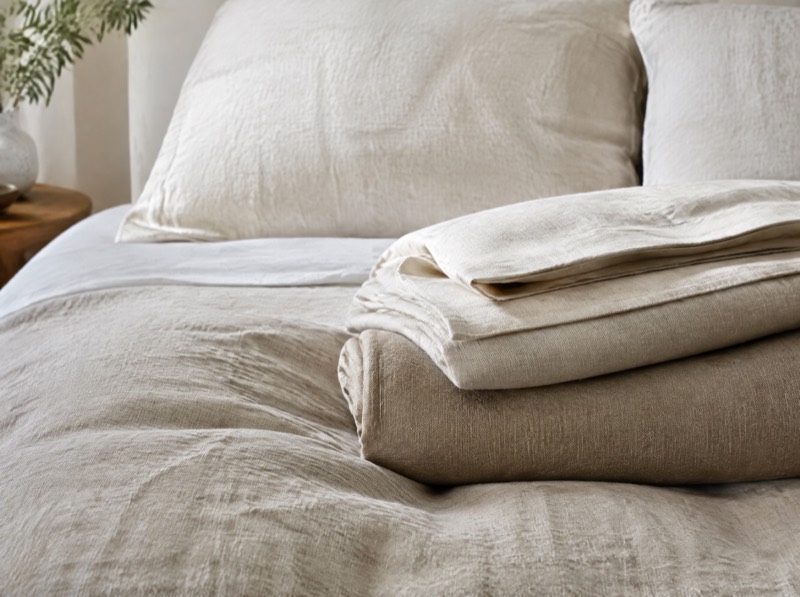
Linen in summer, wool in winter, and the layers in between. A simple guide to bedding that adapts with the year instead of needing to be replaced by it.
Making a bed well is one of those quiet skills that pays back every single day. But most bedding advice assumes a fixed climate and a fixed person, and neither is true: the same bed needs to breathe through a July heatwave and hold warmth through a January frost. The answer is not more bedding. It is better layers.
Start with linen, all year
Linen is our first layer in every season. In summer it wicks moisture and feels cool to the touch; in winter it adds a little weight without trapping heat the way synthetic sheets do. Good linen softens with every wash and lasts for decades — the creases are part of the deal, and after a month you stop noticing them.
Add wool for the cold months
When the nights draw in, we add a wool blanket between the sheet and the duvet. Wool regulates temperature far better than synthetic fleece: it traps warm air but releases moisture, so you wake warm rather than clammy. A single well-made wool blanket will outlast a stack of cheaper throws.
The duvet question
Two lighter duvets beat one heavy one. A 200gsm duvet alone covers spring and autumn; layered with a 300gsm in winter it handles the coldest weeks; in high summer the lighter one alone, or none at all with a cotton coverlet. It costs less than replacing a single all-season duvet every few years, and it lets you adjust night by night.
Wash less, air more
Linen and wool are naturally odour-resistant. Airing bedding on a dry morning does more for freshness than another hot wash, and it is far kinder to the fibres. Wash linen at a low temperature with a gentle detergent, and wool rarely — spot-clean and air it, and it will reward you for years.
The best-dressed bed is not the fullest one. It is the one that changes with the season, a layer at a time — and gets out of your way.