Buying less is only half the argument. The other half is buying things worth keeping — and learning to tell the difference before you pay.
“Buy less, buy better” has become a slogan, repeated so often it has lost its teeth. But underneath the slogan is a genuinely useful idea: most of what fills a home is neither loved nor necessary, and the things that last are almost never the things that were cheap.
The cost per year, not the price
A fifteen-euro candle that burns for a week is more expensive than a thirty-euro candle that burns for a month. A cheap linen cushion that pills and splits costs more per year than one that lasts a decade. Doing this arithmetic changes what “expensive” means — and it usually points towards fewer, better purchases.
What “better” actually looks like
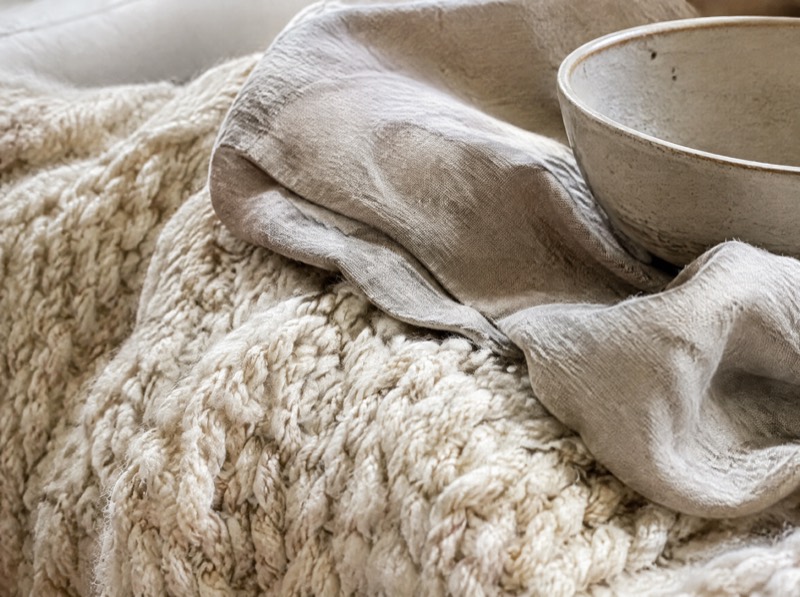
It is rarely about brand or price. It is about materials you can name, joins you can see, and a maker who would answer a question about how it was made. Better things tend to be repairable: a wooden chair with screws rather than glue, a lamp with a replaceable flex, a wool blanket that can be darned. If a thing cannot be repaired, it is designed to be replaced, whatever the label says.
The waiting rule
When I want something, I wait two weeks. If I still want it, and I can describe exactly where it will live and what it will replace, I buy it. Roughly half the time, the wanting passes. The other half, the waiting has made the choice clearer — and the object more welcome when it arrives.
Let the empty space stay empty
The hardest part of owning fewer things is resisting the urge to fill the gap. A shelf with three objects on it is finished, not incomplete. Empty space is what lets the things you chose stand out, and what gives a room the feeling of calm that no amount of styling can fake.
Fewer, better things is not a rule about austerity. It is an invitation to notice what you already own — and to let the rest go.